Wandering or Rooted? Unpacking the Igbo Reputation for Migration in Nigeria
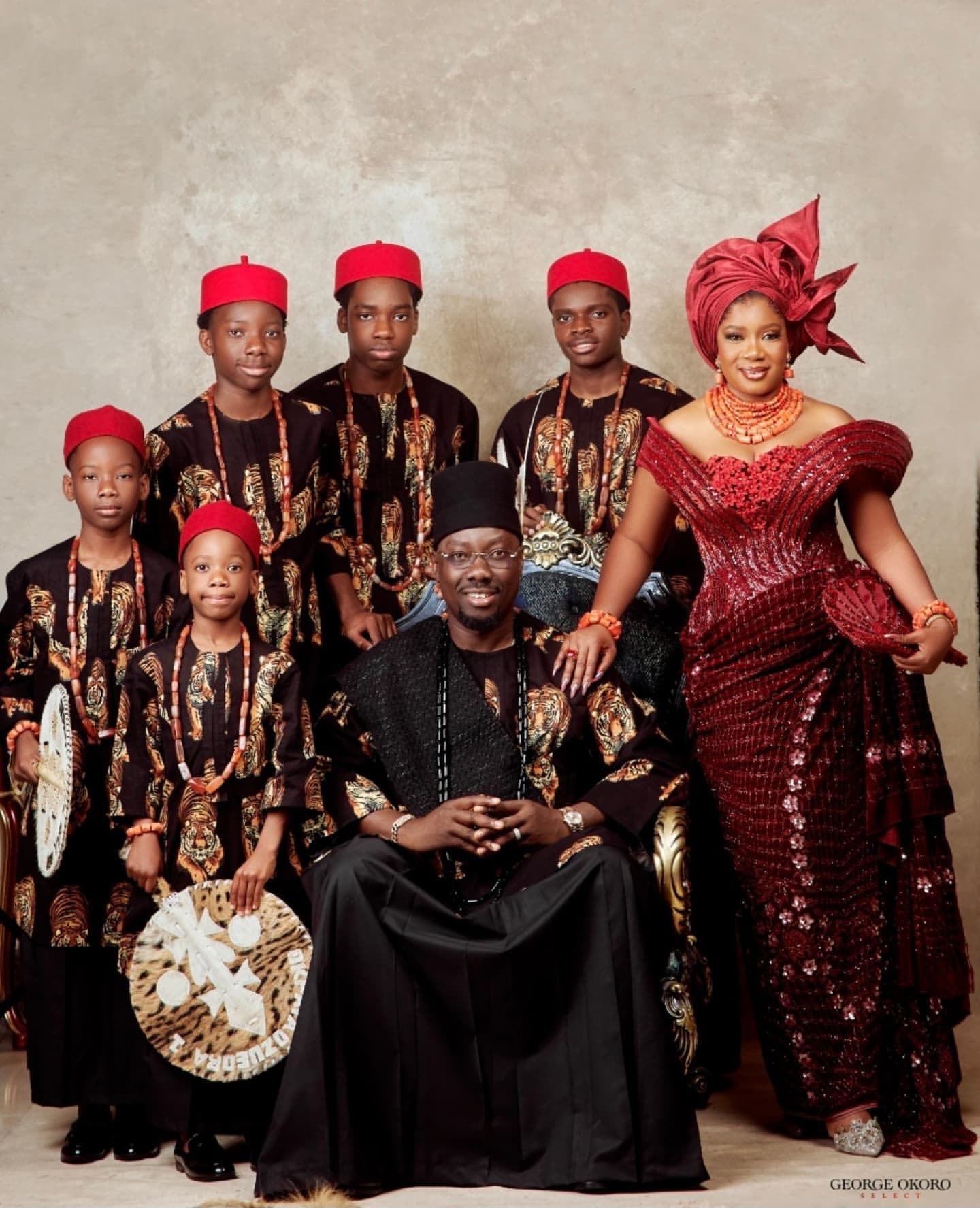
Obi Cubana
While the Igbo people are widely perceived as the most migratory group in Nigeria, this reputation is shaped by a complex interplay of historical, economic, and socio-political factors. Understanding Igbo migration requires moving beyond stereotypes to examine the broader Nigerian context of mobility, opportunity, and adaptation.
The notion that Igbos are uniquely migratory among Nigerians is both an observation and a simplification. This article explores the evidence, historical context, and comparative patterns of internal and international migration among Nigerian ethnic groups, revealing that while Igbo mobility is significant, it is neither ahistorical nor unmatched. Through careful analysis, we aim to provide a nuanced understanding of Igbo migration, dispelling myths while highlighting the agency and adaptability of the Igbo people within Nigeria’s dynamic landscape.
It is common, both within Nigeria and in the diaspora, to hear the assertion that “Igbos are the most migratory Nigerians.” The evidence appears to be everywhere: from bustling markets in Kano to thriving businesses in London and Houston, the Igbo presence is unmistakable. This reputation is often recited as both a compliment—testimony to entrepreneurial energy—and as a simplistic label that can obscure deeper realities. But is this perception accurate? And what does it reveal about the Igbo, about Nigeria, and about the broader dynamics of migration in a multiethnic society?
Migration is a story older than the Nigerian nation itself, shaped by trade, colonialism, politics, and the search for opportunity. To understand whether the Igbo are indeed the most migratory Nigerians, we must look beyond anecdotes to consider history, data, and comparative context.
Historical Patterns: Mobility as Tradition and Necessity
The Igbo have long been renowned for their adaptability and mobility. Archaeological and historical evidence, such as the Lejja Iron-Smelting Civilization, attests to centuries of technological ingenuity and trading networks that spanned far beyond traditional boundaries. As discussed in our prior article, “Lejja Iron-Smelting Civilization — Africa’s Forgotten Technological Power,” the Igbo were never averse to crossing boundaries in pursuit of knowledge, trade, and connection.
Colonial-era records further document significant Igbo migration within Nigeria, especially from the early 20th century. The expansion of colonial infrastructure, such as the railways and administrative centers, created new economic opportunities. Igbos, often excluded from large landholdings in their densely populated southeastern heartland, moved to urban centers across Nigeria to work as traders, clerks, artisans, and professionals. By the 1950s, Igbo communities had established themselves in cities from Jos to Lagos, a pattern that intensified after independence.
But this mobility was not merely a matter of cultural preference; it was frequently a response to structural constraints. The southeast’s limited agricultural land, population pressure, and lack of significant federal investment after the civil war made migration not only attractive, but, for many, essential to survival and advancement.
Comparative Context: How Do Other Nigerians Migrate?
While the Igbo pattern of migration is visible and well-documented, it is important not to conflate visibility with uniqueness. Other Nigerian groups—Yoruba, Hausa, Fulani, Kanuri, and many more—also have longstanding migration traditions.
For example, the Fulani are historically pastoralist, with transhumant patterns that traverse not only Nigeria but much of West Africa. The Hausa merchant diaspora, known as the Jarmai, established trade colonies across the Sahel centuries before colonial boundaries existed. Yoruba communities have similarly migrated for trade, education, and opportunity, both within Nigeria and abroad; cities like Ibadan, Lagos, and Porto-Novo became melting pots of Yoruba and other ethnicities.
Recent data, including Nigeria’s National Population Commission estimates and academic studies, show that internal migration is a nationwide phenomenon. The 2006 census, Nigeria’s most recent comprehensive headcount, found that more than a quarter of Nigerians lived outside their state of origin, with significant migration flows across all major ethnicities.
So why, then, does the Igbo pattern of migration attract particular attention? Two factors stand out: the economic visibility of Igbo migrants and the deliberate settlement strategies that often see Igbos investing in, and integrating into, local economies. Unlike some groups who migrate for seasonal labor or return periodically, many Igbo migrants establish roots, build businesses, and participate actively in the political and social life of their host communities. This visibility can, unfortunately, also make them targets during periods of tension, as seen in both the pre-civil war pogroms and occasional outbreaks of violence in northern markets.
Motivations and Meanings: Agency, Marginalization, and Opportunity
To understand Igbo migration is to recognize both agency and constraint. As explored in our article, “Are the Igbo Marginalized in Nigeria?”, the Biafran War and its aftermath left the southeast region economically and politically disadvantaged. Federal policies—such as the infamous £20 compensation for pre-war bank balances, disproportionate allocation of infrastructure and jobs, and a pattern of political exclusion—compelled many Igbos to seek fortunes elsewhere.
Yet, it would be misleading to reduce Igbo migration solely to marginalization. Migration is also a positive assertion of agency, resilience, and ambition. It is an expression of the communal aspiration for advancement, education, and entrepreneurship. Igbo proverbs such as “Aku ruo ulo” (let the wealth return home) capture this ethic: migrate, succeed, but never forget your roots.
Diaspora Dimensions: International Migration and Identity
In recent decades, Igbo migration has extended far beyond Nigeria’s borders. Today, vibrant Igbo communities can be found in the United States, United Kingdom, South Africa, China, and beyond. The internationalization of the Igbo experience is reflected in both success stories—such as influential professionals, academics, and business leaders—and in advocacy. As detailed in “Igbos Amplified the Christian Killing Crisis in Nigeria,” diaspora Igbos have played a significant role in drawing global attention to issues facing Christians in Nigeria, though not without controversy and critique.
The international Igbo diaspora is part of a broader Nigerian pattern. Yoruba and Hausa-Fulani communities are also prominent in the global Nigerian presence, and migration is increasingly a pan-Nigerian phenomenon spurred by economic pressures and globalization.
Dangers of Simplification: Scapegoating and Narrative Responsibility
While it is tempting to celebrate the Igbo as the archetypal Nigerian migrant, or to lament their displacement as evidence of marginalization, such narratives can be double-edged. As explored in “Against Simplification: Responsible Narratives and Igbo Accountability in Nigerian Affairs,” oversimplified stories risk obscuring both diversity and agency. Worse, they can fuel scapegoating, where the economic success or visibility of Igbo migrants becomes a pretext for resentment or violence.
It is crucial to recognize that migration is not a zero-sum game. The Igbo experience offers lessons about adaptation, investment, and nation-building, but these lessons are not unique to one group. Nigerian history is rich with stories of movement, exchange, and cross-pollination. To reduce migration to a single ethnic trait is to misunderstand both Nigeria and the Igbo themselves.
Conclusion: Migration as Adaptation—The Igbo in Nigerian Context
Are the Igbos the most migratory Nigerians? The answer, as with most questions of identity and history, is complex. Igbo migration is highly visible, historically deep, and shaped by both necessity and ambition. Yet it is not unique, nor is it the product of a singular narrative of marginalization or exceptionalism.
What distinguishes the Igbo is not simply the act of migration, but the capacity to adapt, invest, and build community wherever they find themselves. This story, while rooted in Igbo experience, is ultimately a Nigerian story—a testament to the enduring power of mobility, resilience, and the search for opportunity in the face of challenge. In honoring this complexity, we move beyond stereotypes and toward a fuller, more honest reckoning with Nigeria’s past, present, and future.