Kidnappings, Denials, and Narratives: Lessons from the Kaduna Crisis
igbonews.org
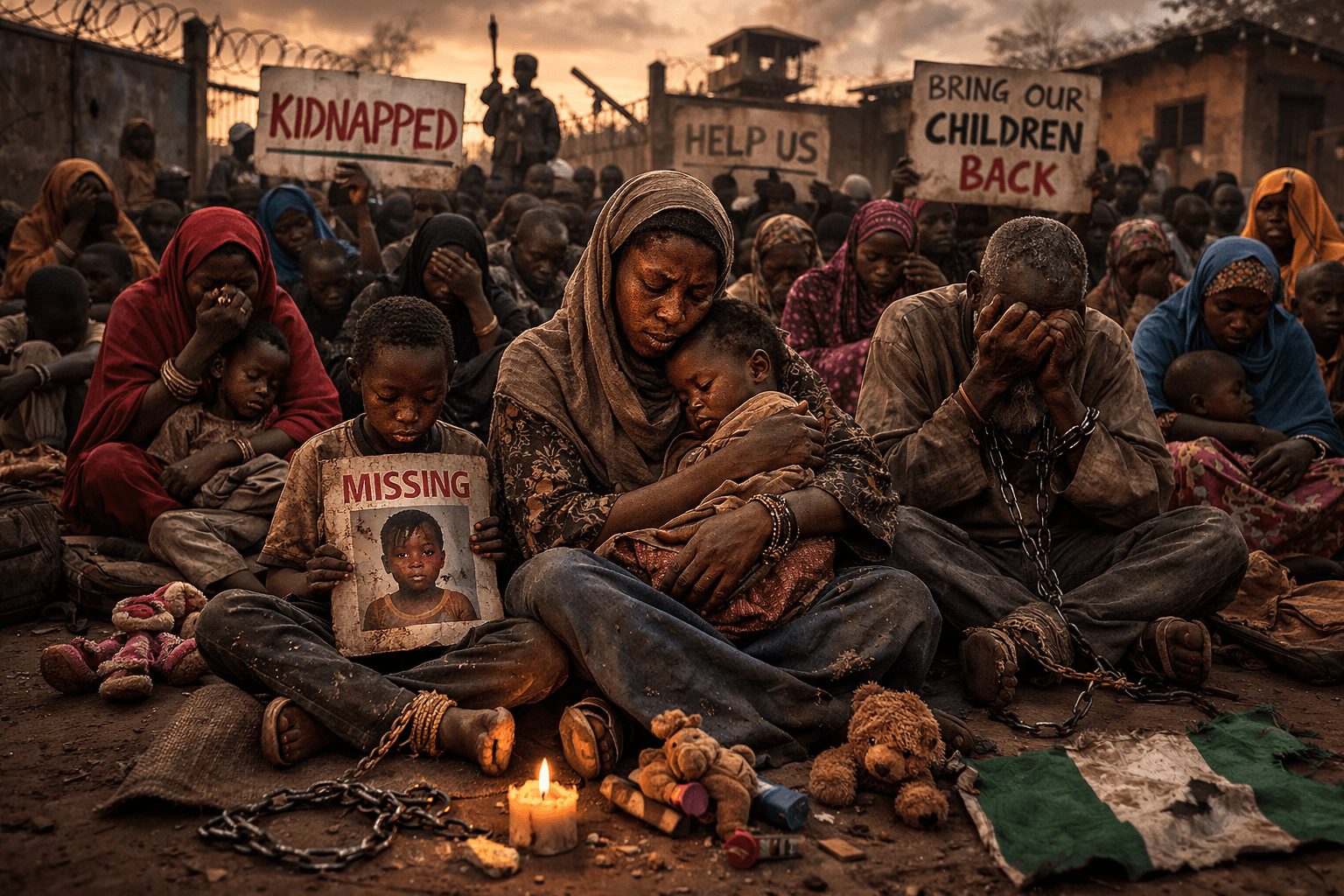
The recent release of over 160 abducted villagers and churchgoers in Kaduna, following initial official denials, underscores the urgent need for greater transparency, accountability, and responsible narrative construction within Nigeria’s security landscape. Examining these events through a lens of historical and societal complexity reveals the dangers of misrepresentation and scapegoating in a fragile, multi-ethnic nation. The Kaduna kidnappings and the government’s shifting responses have reignited questions about Nigeria’s security crisis, state accountability, and how narratives are constructed in times of turmoil. This article explores the facts of the case, historical patterns of government communication, and the risks of ethnic or religious scapegoating, drawing on lessons from prior incidents and the need for principled, fact-based discourse.
On a quiet morning in Kaduna state, northwest Nigeria, more than 160 villagers and churchgoers were finally released from captivity, ending a harrowing episode that began with violence and fear. Yet, this outcome was overshadowed by controversy: for days, government authorities had denied that such mass abductions had even occurred. Only after growing pressure—and the eventual release of the victims—did officials confirm the reality that had already been widely reported by local communities and the international press.
This incident, while tragic, is emblematic of broader patterns in Nigeria’s ongoing security crisis: the frequency and scale of kidnappings, the opacity of official communication, and the way narratives are constructed and contested in a country marked by ethnic and religious diversity. As we reflect on the Kaduna kidnappings, it is crucial to examine not only the facts but also the narratives that shape public understanding and policy responses.
I. The Facts: What Happened in Kaduna?
Kaduna, a state long beset by insecurity and violence, has seen a surge in mass kidnappings in recent years. In the most recent incident, armed groups stormed villages and a church—abducting over 160 people and killing at least seven. The victims, held for ransom by criminal networks with complex regional ties, were eventually freed after days of uncertainty.
Yet, the government’s response raised as many questions as the crisis itself. Authorities initially denied reports of mass abductions, only to later acknowledge them when the victims were released. This pattern of official denial followed by reluctant confirmation is not new; it reflects broader issues of government transparency and communication in times of crisis.
The resignation of Nigeria’s defence minister at the height of the crisis, officially for health reasons, added another layer of complexity. While no direct link was established, the timing fueled speculation about official accountability and the pressures facing those charged with national security.
II. The Broader Security Crisis: Patterns and Challenges
Nigeria’s security challenges are neither new nor isolated. Mass kidnapping, especially for ransom have become distressingly common, affecting schoolchildren, commuters, worshippers, and entire communities. Kaduna is only one flashpoint among many. The perpetrators, often organized criminal or insurgent groups, operate in networks that transcend state and national boundaries
These crises are not simply law enforcement failures; they are symptomatic of deeper structural issues: poverty, unemployment, the proliferation of arms, and fragile state institutions. International partners and human rights organizations have repeatedly expressed concern over Nigeria’s inability to protect its citizens, warning that continued instability could have far-reaching consequences for regional security.
III. Official Denials, Public Trust, and State Accountability
The government’s initial denial of the Kaduna kidnappings is a familiar feature of Nigerian crisis management. Such denials often stem from a desire to avoid panic, maintain public order, or protect official reputations. Yet, as history has shown, they can also undermine public trust and delay effective responses.
When governments withhold or distort information, they create vacuums readily filled by speculation, rumor, or politicized narratives. In a country as diverse and divided as Nigeria, this can have dangerous consequences, including the erosion of state legitimacy and the fueling of ethnic or religious tensions.
IV. The Power—and Peril—of Narratives
Narratives matter. How a crisis is explained, who is blamed, and which facts are amplified or suppressed all influence the public’s understanding and the policy responses that follow. In Nigeria’s multi-ethnic context, there is a particularly acute risk that crises—especially those involving attacks on churches or specific communities—will be filtered through ethnic or religious lenses.
Prior articles on Eziokwu.app have cautioned against the personalization of blame: attributing state failures or international consequences to individual civilians or minority groups, such as the Igbo, rather than to systemic or institutional causes. The Kaduna kidnappings, while not directly implicating any ethnic group in the perpetration, fit into a broader historical pattern where narratives about violence and insecurity sometimes become vehicles for scapegoating or deflection ([See: "Against Simplification: Responsible Narratives and Igbo Accountability in Nigerian Affairs"]).
It is crucial to distinguish between the actions of criminal or insurgent groups and the wider communities they may claim to represent—or, more often, victimize. There is a long and troubling history in Nigeria of crises being used to justify discrimination or suspicion against entire ethnic or religious groups. Responsible media reporting and official communication must guard against these tendencies.
V. Media, Verification, and Responsible Reporting
The Kaduna crisis also highlights the role of media in shaping narratives. When governments issue denials, journalists face the challenge of verifying facts in real time, often relying on local sources, eyewitnesses, and humanitarian organizations. The risk is that unverified claims, especially those that touch on sensitive ethnic or religious issues, can be amplified and distorted, fueling panic or resentment.
Fact-based, principled reporting is essential, not only for public awareness but also for holding authorities accountable. As noted in previous Eziokwu.app analyses, media must resist the temptation to simplify complex crises or to assign collective blame where it is unwarranted. Instead, the focus should remain on evidence, context, and the underlying structural challenges that perpetuate insecurity.
VI. Implications for Policy and Public Discourse
The Kaduna kidnappings and their aftermath offer several lessons for policymakers, civil society, and the public. First, transparency and honesty in official communication are indispensable for maintaining public trust. Second, addressing security challenges requires not just military or police action but sustained investment in social and economic development, conflict resolution, and community engagement.
Finally, the construction of narratives—by officials, media, and citizens alike—has real consequences. Narratives that scapegoat, misrepresent, or deflect responsibility away from institutions are not only unjust but also counterproductive, deepening divisions and hindering effective solutions.
Conclusion: Towards Truth and Accountability
The release of over 160 Kaduna villagers and churchgoers is a cause for relief, but it is also a sobering reminder of Nigeria’s ongoing security dilemmas and the importance of principled, fact-based discourse. In a nation marked by diversity and fragility, responsible narrative construction is not a luxury—it is a necessity for peace, justice, and progress.
As the Nigerian state confronts its security challenges, the path forward must be guided by transparency, accountability, and a commitment to truth. Only by resisting the temptations of denial, simplification, and scapegoating can Nigeria hope to build the trust and unity needed to address its most pressing problems. The lessons of Kaduna must not be forgotten; they point the way towards a more honest, inclusive, and secure future for all Nigerians.
Related Articles

Women’s Month 2026: Honouring Igbo Women as Catalysts for Change in Contemporary Nigeria

When Protests Become Narratives: Who Controls the Story in Nigeria?

National Honours and National Memory: Gilbert Chagoury’s GCON and the Complexities of Recognition in Nigeria