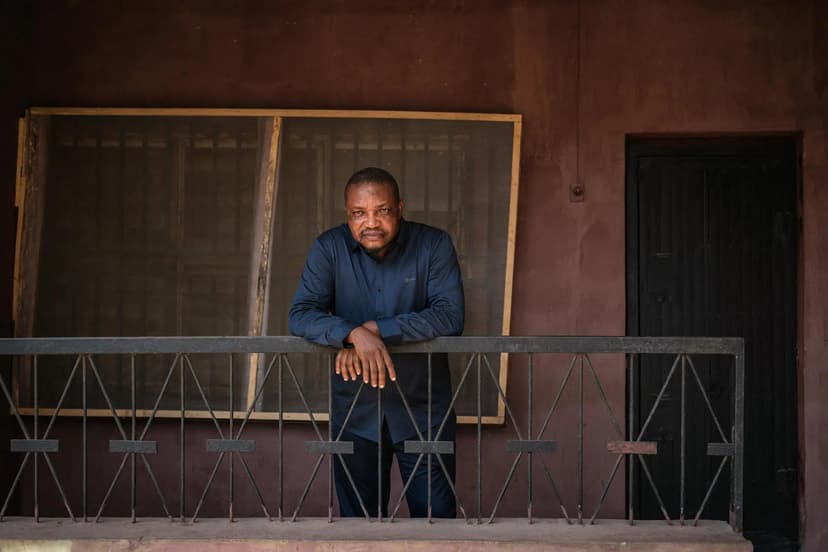
When Protests Become Narratives: Who Controls the Story in Nigeria?
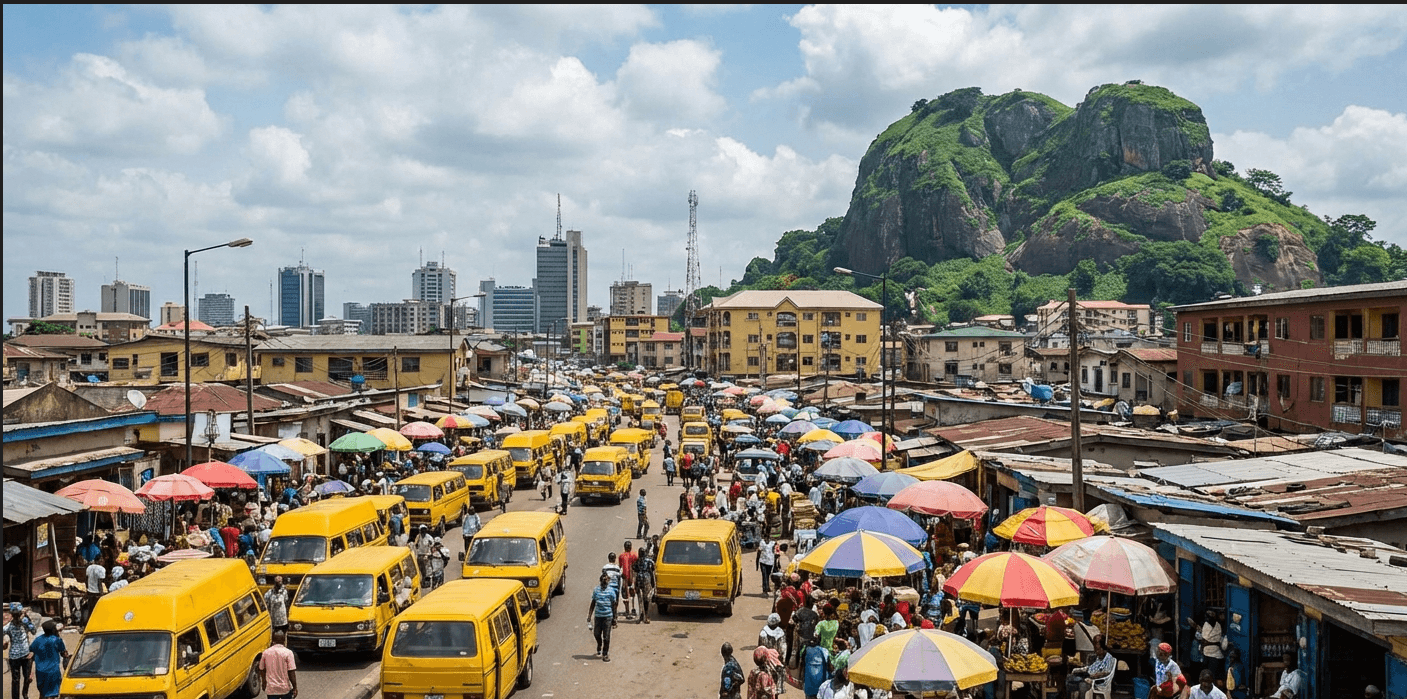
Eziokwu
In Nigeria, the stories told about protests often gain as much significance as the events themselves, with government, media, civil society, and international actors all vying for control over the narrative. Examining who shapes these accounts, and how, reveals deeper truths about power, representation, and the risks of scapegoating communities.
This article explores the complex dynamics behind how protest narratives are constructed and controlled in Nigeria. It examines the roles played by government, media, and international actors, highlighting the impact on targeted communities and the importance of responsible storytelling. Through historical context and evidence, the article urges a critical, balanced approach to understanding whose voices shape public perception and policy.
In every society, protest is a catalyst for change—and for controversy. In Nigeria, where ethnic, religious, and regional identities are deeply woven into the national fabric, the way protests are reported and remembered is often as consequential as the protests themselves. Who gets to frame these events? Whose voices shape the story? When protests become narratives, the struggle for control over their meaning can obscure facts, shift blame, and deepen divisions. Understanding this process is essential, especially as certain communities, like the Igbo, have repeatedly found themselves at the center of contestation over narrative ownership.
The Architecture of Narrative Control
Government as Narrator and Gatekeeper
The Nigerian government, like many around the world, is acutely aware of the power of narrative. Official statements, press briefings, and legal actions are not just responses to unrest—they are attempts to define it. For instance, following major protests, government spokespersons often emphasize national unity, constitutional order, or external threats to frame events in a way that justifies policy responses (Source: The State House, Abuja). In some cases, the government has rejected international criticisms, such as claims of Christian genocide, positioning itself as the ultimate arbiter of truth and sovereignty (Source: Al Jazeera).
This tendency to centralize narrative control can be seen in how authorities respond to both internal dissent and international scrutiny. As noted in prior Eziokwu articles, such as “Against Simplification: Responsible Narratives and Igbo Accountability in Nigerian Affairs,” governments may resist external labeling of protests, particularly when those protests relate to deeply sensitive issues like religious freedom, resource control, or ethnic marginalization.
Media: Amplifier, Gatekeeper, or Catalyst?
Media outlets play a crucial, dual role. On one hand, they are responsible for reporting facts and amplifying marginalized voices. On the other, they can inadvertently—or deliberately—reproduce official narratives, sometimes without adequate scrutiny or verification. The speed of modern news cycles and the viral nature of social media further complicate this dynamic, making the line between fact and speculation ever thinner.
Consider, for example, how media coverage of protests in southeastern Nigeria often vacillates between highlighting legitimate grievances and echoing state concerns about security or secession. Unverified claims, especially those that implicate entire ethnicities or religious groups, can quickly take on a life of their own. As explored in “Blaming Igbos for ‘Christian Genocide’ Narratives Is Misleading,” such reporting risks conflating the actions of a few with the aspirations or behaviors of the many, giving rise to harmful stereotypes and scapegoating.
International Actors: External Pressure, Internal Consequences
International bodies, foreign governments, and NGOs increasingly weigh in on Nigerian protests, particularly when human rights or religious freedom is at stake. Their interventions can draw global attention, as seen with the U.S. government’s statements on religious freedom, but can also be met with resistance or selective engagement by Nigerian authorities. The government’s insistence on maintaining territorial integrity and sovereignty reflects a broader wariness of external narrative imposition (Source: Federal Ministry of Information and National Orientation).
While international advocacy can provide crucial scrutiny and support for vulnerable groups, it can also oversimplify complex realities or inadvertently reinforce existing biases. As previous Eziokwu articles have discussed, the internationalization of narratives—whether about Christian persecution or ethnic marginalization—requires careful, nuanced analysis to avoid amplifying simplistic or misleading accounts.
The Consequences of Narrative Ownership
When Individuals Bear Collective Blame
One of the most persistent dangers in the contest over protest narratives is the tendency to assign collective blame. In moments of unrest, there is a risk that the actions of a few are ascribed to entire communities. This is not a new phenomenon in Nigeria: the Igbo, in particular, have historically been subject to such scapegoating, from the aftermath of the 1966 coups to the Biafran War and beyond.
Recent events underscore how quickly narrative control can slip into collective accusation. In the wake of protests or security incidents, public discourse may pivot from addressing specific grievances to questioning the loyalty or intentions of entire ethnic groups. Such patterns were highlighted in Eziokwu’s “Are the Igbo the Most Marginalized of Nigeria’s Three Major Ethnic Groups?” and remain relevant today.
Government Responsibility vs. Ethnic Blame
Another facet of narrative control is the deflection of government responsibility onto ethnic or religious groups. Instead of engaging with the structural causes of protests—such as economic exclusion, political marginalization, or police brutality—there is sometimes a tendency to redirect the conversation toward alleged ethnic agendas or conspiracies. This not only obscures the role of state actors but also deepens societal fractures.
It is vital, then, to distinguish between legitimate state concerns and the misuse of narrative for political ends. Responsible storytelling must hold institutions accountable without resorting to ethnic scapegoating or simplification. As Eziokwu’s “Order in the Marketplace” and “The Igbo Apprentice System” articles have shown, communities often develop their own mechanisms for accountability and resilience—realities that are too often overlooked in mainstream narratives.
The Role of Historical Memory and Cultural Context
Protest narratives do not emerge in a vacuum. They are shaped by layers of historical memory, cultural practice, and collective trauma. For the Igbo and other groups, the stories told about protests are inseparable from broader struggles over recognition, dignity, and belonging. The tendency to erase or rewrite uncomfortable histories—whether through omission or oversimplification—can have profound implications for reconciliation and progress.
Prior Eziokwu explorations, such as “Words Unspoken: Language Loss and the Horizons of Igbo Thought,” remind us that narrative control is not just about politics—it is about cultural survival and the right to self-definition. When protests are recast solely as threats or disruptions, the legitimate aspirations and grievances of communities risk being silenced or delegitimized.
Toward Responsible Narrative Stewardship
Fostering a Culture of Verification and Accountability
If narrative control is a source of power, it must also be a site of responsibility. Media organizations, government officials, civil society, and international actors all share a duty to verify, contextualize, and critically examine the stories they tell. Rapid response should never come at the expense of accuracy; amplifying unverified or sensational claims can cause real harm, particularly to already vulnerable communities.
Embracing Complexity and Multiplicity
No single narrative can capture the full reality of protest in Nigeria, or anywhere else. The challenge is not to impose a uniform story, but to make space for multiple perspectives, histories, and experiences. This means resisting both the flattening of dissent into chaos and the reduction of communities to static categories. It also means foregrounding the voices of those most affected, rather than speaking about them in abstraction.
Learning from the Past, Shaping the Future
Finally, the contest over protest narratives must be understood in light of Nigeria’s fragile ethnic landscape. The costs of misrepresentation, scapegoating, and narrative erasure are not merely rhetorical; they have shaped the nation’s most painful chapters. If history is any guide, responsible narrative stewardship is not just an ethical imperative but a prerequisite for national cohesion and progress.
Conclusion: Who Tells the Story, and Why It Matters
When protests become narratives, the stories told are never neutral. They are shaped by power, memory, and the ever-present risk of distortion or manipulation. In Nigeria, the stakes are especially high: the contest over narrative control can either foster understanding and reform or deepen mistrust and division. As we reflect on these dynamics, the imperative is clear: to be vigilant, critical, and fair in the stories we tell—not just about protests, but about the people and histories they represent. Only then can narrative become a tool for truth and reconciliation, rather than a weapon for blame or exclusion.
Related Articles
Women’s Month 2026: Honouring Igbo Women as Catalysts for Change in Contemporary Nigeria
Kidnappings, Denials, and Narratives: Lessons from the Kaduna Crisis
National Honours and National Memory: Gilbert Chagoury’s GCON and the Complexities of Recognition in Nigeria