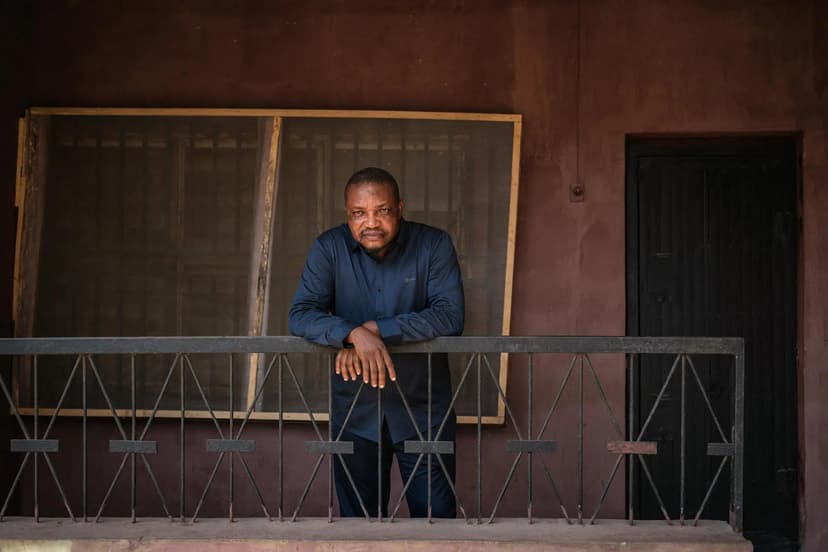
National Honours and National Memory: Gilbert Chagoury’s GCON and the Complexities of Recognition in Nigeria
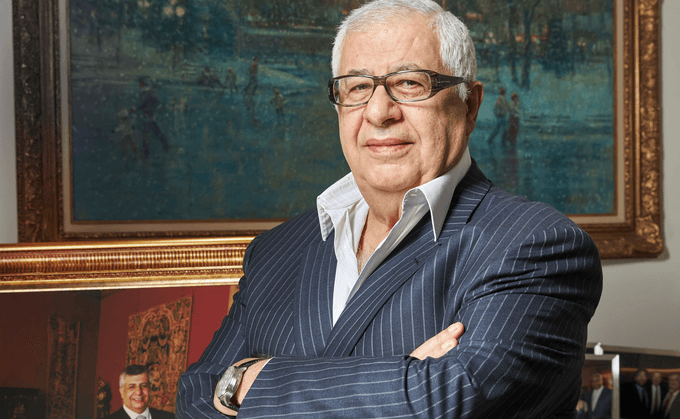
President Tinubu’s conferment of the GCON on Gilbert Chagoury spotlights the intersections of national recognition, public memory, and the evolving standards by which Nigeria honours its citizens. A careful examination reveals both the merits and controversies surrounding such honours, set against the backdrop of Nigeria’s complex political and historical landscape.
President Bola Tinubu’s decision to award the Grand Commander of the Order of the Niger (GCON) to industrialist Gilbert Chagoury has reignited debate about the criteria and implications of national honours in Nigeria. This article explores the legacy of Chagoury, the standards guiding national recognition, and the broader implications for national unity, public perception, and historical accountability. By drawing on recent discussions and historical context, we offer a balanced analysis of what such honours signal about Nigeria’s trajectory and collective memory.
Honouring a Legacy, Rekindling Debate
On 20 January 2026, President Bola Tinubu conferred Nigeria’s second highest national honour—the Grand Commander of the Order of the Niger (GCON)—on Gilbert Chagoury, celebrated industrialist and patriarch of the Chagoury Group. The ceremony, imbued with the weight of official recognition, was intended as a celebration of Chagoury’s contributions to Nigeria’s industrial and economic development. Yet, behind the applause, the event stirred reflection: What do such honours represent in the fabric of national identity? Whose legacy do they enshrine, and what messages do they send about the nation’s values and memory?
In a country as complex and plural as Nigeria, national recognition is never a simple matter. It intersects with questions of history, accountability, and the evolving aspirations of a diverse citizenry. As we consider the Chagoury honour, it is necessary to examine not only the man and his achievements, but also the broader context within which such recognition takes place.
Chagoury’s Impact: Industrial Achievement and Philanthropy
Gilbert Chagoury, a businessman of Lebanese-Nigerian heritage, has long been a prominent figure in Nigeria’s industrial landscape. The Chagoury Group, which he co-founded, operates across construction, real estate, telecommunications, and manufacturing—sectors critical to Nigeria’s economic development. Through initiatives such as the Eko Atlantic project, Chagoury has positioned himself and his group as key players in the transformation of Lagos and beyond.
In conferring the GCON, the Tinubu administration signaled official recognition of these contributions. National honours, including the GCON, are traditionally reserved for those deemed to have rendered exceptional service to the country. In this light, Chagoury’s industrial investments, job creation, and philanthropic activities present a compelling case for recognition. Such honours serve, at their best, as instruments of state gratitude—both to reward individual achievement and to inspire broader civic engagement.
Contestation and Controversy: Memory, Accountability, and Public Perception
Yet, the story of national honours is rarely straightforward. Gilbert Chagoury’s name is not without controversy. As documented in investigative reports, including the Premium Times’ exposé, Chagoury was linked to Nigeria’s era of military rule, particularly the administration of the late General Sani Abacha. The report alleges that Chagoury and his business interests were associated with the regime’s financial dealings, raising questions about the sources of his wealth and the ethical standards applied in bestowing national awards.
To be clear: conferring honours on individuals with complex legacies is not unique to Nigeria. Many nations grapple with the tension between achievement and accountability, between public service and private interest. The challenge, however, is amplified in Nigeria—a nation still navigating the aftermath of decades of military rule, corruption scandals, and contested state legitimacy.
It is important to distinguish between verified fact and unsubstantiated rumour. While Chagoury has faced allegations, it is equally true that he has not been convicted of any crime in Nigeria. The principle of presumption of innocence remains foundational to any fair society. Nevertheless, national honours are not only legal endorsements; they are moral and symbolic gestures. The optics of such awards matter, particularly in a country where public trust in institutions remains fragile.
National Honours: Criteria, Standards, and the Question of Reform
The Chagoury case brings to the fore enduring questions about the standards and transparency of Nigeria’s national honours system. By law and tradition, honours such as the GCON are intended to celebrate service, integrity, and patriotism. Yet, over the years, public perception has sometimes been that awards are shaped as much by political patronage and connections as by merit.
Calls for reform are not new. Civil society groups, media commentators, and a cross-section of Nigerians have repeatedly urged greater transparency in the nomination and vetting process. Some advocate for the publication of clear criteria and public input before honours are awarded. Others suggest posthumous reviews or even the revocation of honours when recipients are later found to have engaged in grave misconduct.
These debates are not merely procedural; they go to the heart of national identity and cohesion. In a diverse federation where ethnic, religious, and regional identities are deeply felt, the perception of fairness in public recognition can either build or erode trust in the state. As recent Eziokwu articles have shown, narratives around religious violence and advocacy—often amplified by specific groups and diaspora communities—shape both local and international perceptions of Nigeria’s progress and challenges. In this sense, national honours are not just about individuals; they are about the stories a nation tells itself and the values it chooses to elevate.
The Broader Context: National Unity, Historical Memory, and the Role of Recognition
Nigeria’s journey toward nationhood has always been marked by competing memories and contested narratives. From the civil war to the present day, the challenge has been to forge a sense of unity without erasing the legitimate grievances and aspirations of its constituent groups. National honours, when wisely conferred, can serve as bridges—acknowledging diverse contributions while reinforcing a shared sense of purpose.
However, when honours are seen as entrenching political favour or whitewashing controversial legacies, they risk deepening cynicism and division. The Chagoury award, like others before it, invites reflection on how Nigeria can balance recognition of achievement with accountability for the past. The question is not only who is honoured, but what is being honoured—and whether the process itself inspires confidence in the nation’s future.
Conclusion: Towards a More Reflective National Recognition
President Tinubu’s honouring of Gilbert Chagoury with the GCON has reignited important conversations about merit, memory, and the meaning of national recognition in Nigeria. While acknowledging the industrial and philanthropic contributions of Chagoury, it is also necessary to reckon with the complexities of his legacy and the broader standards by which the nation confers its highest honours.
Ultimately, a transparent and principled approach to national awards can serve as a tool for healing and unity—affirming that Nigeria values both achievement and integrity in equal measure. As the country continues to evolve, it is imperative that national recognition reflects not only the successes of its citizens, but also the aspirations and standards of its people. The future of Nigeria’s collective memory—and the trust of its diverse communities—may well depend on it.
Related Articles
Women’s Month 2026: Honouring Igbo Women as Catalysts for Change in Contemporary Nigeria
Kidnappings, Denials, and Narratives: Lessons from the Kaduna Crisis
When Protests Become Narratives: Who Controls the Story in Nigeria?